
1. INTRODUCTION
Plastic pollution is emerging as a significant global environmental challenge; over 300 million tonnes of plastic are produced each year, with much of it winding up in landfills, oceans, and ecosystems. In fact, global plastic production reached approximately 436 million metric tonnes (Mt) in 2023 [1], highlighting the accelerating pace of plastic use and waste generation that continues to threaten environmental sustainability worldwide. These plastics do not break down biologically and cause severe harm to wildlife and marine life, with microplastics penetrating the food chain, posing health risks. Biodegradable polymers emerged as the new promising alternative [2]. These decompose naturally through microbial action that reduces environmental impact. Instead, the polymers are biodegradable based on renewable sources such as starch, cellulose, and Polylactic acid (PLA), which degrade into water, carbon dioxide, and biomass [3]. Their application areas include packaging, agricultural films, medical appliances, and other disposable products. This trend warrants further development, as it is essential for sustainable development and the mitigation of plastic pollution. This will involve government, industries, and consumers in a concerted effort to fund research, promote awareness, and develop production technologies that accelerate the transition toward eco-friendly materials [4]. In the long term, biodegradable polymers can help protect ecosystems, reduce waste, and promote a circular economy by providing a sustainable solution to plastic pollution [5].
Used Cooking Oil (UCO) is an abundant yet largely underutilized waste resource that holds significant potential for sustainable manufacturing [6]. Valorizing UCO into biodegradable polymers overcomes the issues of waste, pollution, and dependence on fossil-based raw materials [7]. Biodegradable polymers manufactured from UCO are an eco-friendly alternative to plastics and promote the practice of the circular economy by converting waste into a product [8]. UCO is a renewable feedstock that is also cost-effective and has a significantly lower carbon footprint in the production of polymers [9]. Its use in polymer synthesis will not only work towards sustainability but also look to solve some improper disposal issues, such as water pollution and clogged drainage systems [10]. Another aspect is that the use of UCO in biodegradable polymer production lines supports global attempts toward waste minimization and sustainable development, encouraging green chemistry principles and new scope for green innovations in the polymer sector [2,11].
UCO serves as an especially suitable feedstock for biodegradable polymer production compared to other biomass sources, such as lignocellulosic and starches, due to its high triglyceride content, low processing cost, and ready availability as a waste byproduct from the food industry [12]. Unlike lignocellulosic biomass, which requires complex pretreatment and enzymatic hydrolysis to release fermentable sugars, UCO can be directly converted into monomers through relatively simple transesterification and polymerization reactions. Moreover, its valorization eliminates the “food versus fuel” conflict associated with starch-based feedstocks while simultaneously addressing waste management challenges. On a global scale, more than 30 million tonnes of UCO are generated annually, with <20% properly collected or recycled, indicating a massive untapped resource for sustainable polymer synthesis. The rising global demand for bioplastics is expected to exceed 7.5 million tonnes by 2030, further underscoring the economic and environmental potential of UCO as a renewable, circular feedstock [13].
This review explores the potential of UCO as a sustainable feedstock for the production of biodegradable polymers, addressing critical challenges associated with plastic pollution and waste management. It provides a comprehensive overview of the transesterification and polymerization process derived from UCOs, with comparative evaluation of their environmental performance and end-use applications. Key challenges such as feedstock variability and scalability are discussed alongside emerging technological development and supportive policy inventions. Overall, the work highlights the contribution of UCO-based biodegradable polymers to waste valorization, the advancement of circular economy principles, and the promotion of sustainable industrial development.
2. UCO: AVAILABILITY, COLLECTION, AND HEALTH IMPACTS
UCO is a common item found in most home kitchens, restaurants, and food processing activities, and each year the world generates millions of tonnes of UCO. While there is a growing demand for fried foods and an increasing tendency for people to move into cities, UCO generation continues to rise [9]. In light of this quality, UCO collection and management are critical to prevent environmental impacts and provide sustainable solutions. In many developing countries, formal collection systems led by licensed collectors exist, but they only collect from certain large-scale generators such as restaurants and food sectors [14]. As a result, informal disposal practices such as dumping UCO down the drain can create severe environmental problems to which urban centres, sewer systems, and waterways are very susceptible. If organized UCO collection channels were established, and the public was educated about the value of UCO, then there would be great benefits in getting UCO collected and reused more efficiently [15]. Measures such as the collection of UCO from combined centralized collection points from major generators, financial incentives offered as a reward to households or small businesses, and partnerships with a waste authority will assist with improving safe and regulated collection. UCO availability and collection remain limited due to the lack of infrastructure and low awareness among households and small food establishments about proper disposal practices. UCO that has been properly collected can be treated as a new resource recycled to assist green alternatives, such as rejuvenating asphalt pavements or as a feedstock for biodegradable polymers or other sustainable industrial products [16].
2.1. Sustainability Benefits
Production of biodegradable polymers from UCO provides several environmental and economic advantages. As a waste resource, UCO reduces dependency on virgin fossil-based raw materials, which aligns with global efforts to promote sustainable development and circular economy practices. One of the key advantages is waste valorization, where UCO is converted into biodegradable polymers, addressing the dual problem of waste management and plastic pollution. Upholding a carbon footprint, UCO is a renewable source [17]. Its usage in the production of polymers reduces the emission of greenhouse gases in comparison to traditional plastic production procedures. Second, proper use also eliminates environmental pollution where it otherwise could have been caused due to improper disposal, thus enhancing the possibilities of water and soil pollution [13]. In this regard, an economic view of UCO reflects that it is a feedstock cheaper than its fossil-based alternatives, which then provides much economic benefit to the industries as long as they convert to sustainable resources. Further, the polymer of the UCO process usually requires a much more energetic processing, which often consumes a small amount of energy compared to fossil-based ones, thus making it quite a sustainable process in the processing [11]. The properties of UCO combined with its potential availability make this feedstock one of the possibilities for sustainable uses, such as the production of biodegradable polymers. Its composition does not contradict conversion processes into chemicals, and therefore, organized collection and proper management ensure a guaranteed supply. Implementation of UCO in industrialized practices promotes sustainability in the environment, encourages innovative green ideas, and supports principles of the circular economy [18].
2.2. Characteristics and Potential
UCO represents an emerging feedstock of high potential for the production of eco-friendly products, especially biodegradable polymers. The main source of collection comes from domestic, commercial, and industrial cooking activities. UCO is a low-cost renewable resource contributing to waste management and environmental impact reductions, as well as contributing toward the creation of sustainable raw materials [19].
2.3. Composition of UCO
UCO is diverse in chemistry based on the original oil, cooking conditions, and food residues. In general, UCO typically contains free fatty acids (FFAs), mono and di-glycerides, along with triglycerides. In addition, UCO also contains contaminants, including water, solid particles, and food residues [9]. The oxidation of oil leads to degradation from prolonged heat and oxygen from cooking, leading to peroxides, aldehydes, and polymers. High concentration of FFAs in UCO makes it particularly well-suited to undergo transesterification, based on chemical transformations into biodegradable polymers. However, variability in composition can hinder its efficiency in the polymerization process, requiring adequate pretreatment and purification.
UCO is not a single, uniform substance, but rather a variable mixture of substances that changes continuously as a function of original oil type, frying conditions, type of food fried, and its handling and storage. All of these factors help determine the proportions of triglycerides, diglycerides, monoglycerides, FFA, and “minor” organic components, as well as the load of non-lipid impurities. Recent reviews [20-22] have shown that water and food components dissolved in the frying medium hydrolyze triglycerides while frying, resulting in the formation of FFAs and glycerol derivatives as prime contributors to the increase in acidity and polarity of UCO with usage.
2.3.1. Major lipid species: Triglycerides → di/mono-glycerides → FFAs
Most edible oils are primarily composed of triglycerides (>90% in many cases); however, frying causes hydrolysis and thermal decomposition to produce mono- and diglycerides and increase FFA [23]. FFAs tend to be an important measure of feedstock quality, where the higher the concentration of FFA (e.g., >1–5 wt%, depending on the desired process) generally indicates a reduced yield from catalyzed transesterification or a necessity to change the specific choice of catalyst. In the Previous, research documented determinants for FFA accumulation during repeated frying cycles, with correlates of hydrolysis rates to food moisture content and frying duration.
2.3.2. Impurities and contaminants
UCO contains water and food residues that reduce yield and accelerate hydrolysis and oxidation. Prolonged heating leads to polar oxidation products and polymers, increasing viscosity and causing reactor or process fouling if not removed [9]. The measuring total polar compounds (TPC) as a quick quality check, along with measuring water content to determine whether the oil is suitable for valorization [24].
2.3.3. Thermal oxidation and formation of secondary products
High-temperature frying induces complex lipid oxidation, forming hydroperoxides that rapidly decompose into secondary products such as short-chain aldehydes, ketones, acids, and cyclic compounds. Frequent heating promotes oxidation and polymerization, resulting in dimers, oligomers, and insoluble polymers [21]. These products raise critical concerns: they encompass cytotoxic and genotoxic aldehydes toxic to human health, while also modifying oil properties such as color, odor, and viscosity, complicating chemical processing and valorization [25]. Studies detail mechanisms of aldehyde formation during frying and quantify yield, such as acrolein up to 207 mg/kg after 24 h at 180°C, directly linking higher production to greater oil unsaturation and harsher frying conditions such as temperature and duration [26].
2.3.4. Fatty acid profile: Implications for material properties and valorization
The fatty acid composition of UCO determines its suitability for valorization pathways such as biodiesel and polymer synthesis. Although composition varies with feedstock and dietary habits, studies consistency reports oleic, linoleic, and palmitic acids as dominant fatty acids in UCO. Oleic acid (C18:1, MUFA) is commonly the most prevalent fatty acid and contributes adequate oxidative stability and fluidity to the UCO, which makes it a good precursor of bioplastics and polymers that require monounsaturated oil as feedstock for mechanical and thermal performance [27]. Linoleic acid (C18:2, polyunsaturated fatty acid) is highly susceptible to peroxidation, forming oxidation degradation products that lower the stability of the oil and can cause other complications in synthesizing sensitive production pathways in oil chemistry [28]. On the other hand, the presence of palmitic acid (C16:0, saturated fatty acid) increases viscosity, hardness, and crystallinity of polymeric materials; it also affects cold-flow properties in biodiesel production [7,27]. The oleic acid composition is often reported under a wide range (30–45%), palmitic acid (15–35%), and linoleic acid (5–25%) in terms of oil type and reuse cycles. The usage of these fatty acids in biodiesel decimation is significant in that it directly points to the importance of understanding the composition of the fatty acids before scaling UCO-derived polymers or fuels Table 1 [27].
Table 1: Typical composition and analytical parameters of UCO reported in recent studies.
| Parameter | Typical range | Analytical method | Process/performance implication | References |
|---|---|---|---|---|
| FFA (wt%) | 5–25% | Acid-base titration (as oleic acid) | High FFA Favors acid esterification but inhibits base-catalyzed reactions | [29,30] |
| Moisture content (%) | 0.1–3.0% | Karl Fischer titration | Promotes hydrolysis and oxidation if >1% | [9] |
| TPC (wt%) | 10–35% | Column chromatography/gravimetry | Indicator of oxidation and degradation; affects viscosity | [28] |
| Peroxide value (PV) (meq O2/kg) | 10–80 | Iodometric titration | Reflects primary oxidation; high values hinder polymer quality | [21] |
| Density (g/cm @25°C) | 0.88–0.93 | Pycnometer | Affects mixing and reactor design | [27] |
| Kinematic viscosity (mm²/s @40°C) | 30–70 | Viscometer (ASTM D445) | High viscosity impedes flow and atomization | [31] |
| Acid value (mg KOH/g) | 2–25 | Titration | Key parameter for feedstock quality and catalyst selection | [30] |
| Dominant fatty acids | Oleic (30–45%), Palmitic (15–35%), Linoleic (5–25%) | GC–MS/FAME analysis | Determines polymer flexibility, thermal, and oxidative stability | [27] |
TPC: Total polar compounds, UCO: Used cooking oil, FFA: Free fatty acid, GC-MS: Gas chromatography-mass spectrometry, FAME: Fatty acid methyl ester.
2.3.5. High FFA content
High levels of FFAs present an opportunity and a challenge. While more FFAs present an opportunity when using acid-catalyzed esterification and chemical modifications, the presence of FFAs is advantageous, as the carboxylic acid functionality is a reactive handle for many syntheses. Thus, using UCO is an inexpensive polymer feedstock for the production of biodegradable polyesters or alkyl esters [32]. Alternatively, FFAs are problematic when using base-catalyzed transesterification (typical biodiesel processes) because FFAs react with the base-catalyst to produce soaps that deplete the catalyst and decrease biodiesel yield or volume, meaning FFAs need to be reduced or pre-treated before conducting base transesterification. Recent reviews and experimental work discuss hybrid process flows and direct catalytic methods that tolerate high levels of FFAs [29].
2.3.6. Effects of composition variability on polymer synthesis and process design
Composition differences in UCO affect polymerization kinetics, molecular weight control, and ultimately material properties. For instance, peroxidized or highly oxidized fatty acids can not only serve as radical initiators but also as chain-transfer agents, introducing unpredictable changes to polymer architectures. It significantly influences polymer synthesis efficiency and process design, due to fluctuations in FFA content, moisture, degree of oxidation, and fatty acid profile caused by different oil sources and frying histories. As a result, so that suggesting batch screening and customized treatment before polymerization to ensure product quality is consistent [33].
2.3.7. Pretreatment and purification strategies
Recent studies focus on complementary pretreatments to reduce UCO variability and remove inhibitors, improving feedstock quality. UCO properties vary with oil type and frying conditioners; key parameters before processing including FFA, peroxide value (PV), TPC, and moisture. Typically, UCO contains 2-15%, PV >10 meq O2/kg, TPC of 15–30% and moisture to 2%, all of which affect catalyst activity and reaction yields [34].
Pretreatment usually begins with filtration and centrifugation to remove solids, followed by drying to eliminate water and prevent hydrolysis and soap formation. Acid esterification using sulfuric or p-toluenesulfonic acid for base-catalyzed transesterification. Adsorbents such as activated carbon, bentonite, and resins remove FFA, PV and colour; newer formulation further improve oil stability with minimal side reactions [30].
Mild hydrogenation or oxidative stabilization is occasionally applied in the synthesis of higher-grade biopolymers to reduce double bonds and reactive unsaturation’s to improve the performance and stability of the polymer. Regardless, fractionation or solvent extraction may be applied to freeze out lipid fractions of targeted chain length, but all of these pretreatment stages add cost to the synthesis process. Nevertheless, these stages in the pretreatment process play an important role in refining the feedstock Table 2, enhancing reaction kinetics, and conforming to the standard of production methods for sustainable biopolymers and specialty chemicals [31].
Table 2: Feedstock quality thresholds and recommended pre-treatments.
| Parameter | Typical range in UCO | Acceptable range for polymer synthesis | Effect on processing | Recommended pretreatment method (s) | References |
|---|---|---|---|---|---|
| FFA | 2–15% | ≤1% | High FFA causes soap formation, reduces yield | Acid esterification (H2SO4, HCl), adsorption using activated carbon or clay | [29,32,34] |
| PV | 10–40 meq O2/kg | ≤5 meq O2/kg | Indicates oxidation; affects stability and color | Adsorptive deacidification, mild hydrogenation | [31,34] |
| TPC | 15–30% | ≤10% | High TPC lowers conversion efficiency | Filtration, solvent extraction, and adsorption | [31,33,34] |
| Moisture Content | 0.5–2.0% | ≤0.1% | Promotes hydrolysis and soap formation | Drying (oven, vacuum evaporation, molecular sieves) | [31,34] |
| Solid Impurities | Up to 5% | ≤0.05% | Causes catalyst fouling | Filtration, centrifugation, decantation | [31,34] |
TPC: Total polar compounds, FFA: Free fatty acid, PV: Peroxide value.
2.4. Negative Impacts of UCO
2.4.1. Health impacts
Repeated heating of cooking oil leads to the formation of toxic compounds such as aldehydes, acrylamide, polycyclic aromatic hydrocarbons, and lipid peroxides, many of which exhibit mutagenic, carcinogenic, and cytotoxic properties. Consumption of food prepared with degraded UCO has been associated with increased risks of oxidative stress and inflammation, cardiovascular disorders, and metabolic dysfunction. Due to repeated food frying, the polycyclic aromatic hydrocarbon (PAH) level in vegetable oils increases and shows adverse health effects. These PAHs are hazardous, mutagenic, genotoxic, and carcinogenic. People who are exposed to high levels of PAHs are more prone to develop certain malignancies, including colorectal, breast, esophageal, and stomach cancers [9].
2.4.2. Environmental impacts
Improper disposal of UCO causes water and soil pollution, disrupts aquatic ecosystems by reducing oxygen transfer, and leads to sewer blockages and wastewater overflows. Uncontrolled dumping or burning also contributes to air pollution and greenhouse gas emissions, whereas poor management results in the loss of valuable resources that could otherwise support a sustainable and circular economy [35,36].
3. PROCESSES FOR MANUFACTURING BIODEGRADABLE POLYMERS FROM UCO
The growing demand for environmentally friendly alternatives to fossil-based plastics has garnered much interest in using UCO as a raw material in the production of biodegradable polymers. It may be one of the more promising feedstocks that are simultaneously sustainable and economical for the production of various forms of biodegradable polymers. The procedures most commonly practiced are two steps: transesterification followed by polymerization, for which sophisticated catalysts and enzymes have been used to develop it as an eco-friendly product.
3.1. Transesterification process for conversion of UCO to intermediates
Transesterification is the first step needed to convert UCO to intermediates such as monomers, esters, and glycerol derivatives. It is applied in the synthesis of biodegradable polymers, which are building block-type materials [37]. The reaction of UCO and alcohol, which is probably either methanol or ethanol, in the presence of a catalyst causes the conversion of triglycerides into important intermediates such as fatty acid methyl esters (FAMEs) and glycerol. These intermediates are very important in synthesizing biodegradable polymers, including polyesters and polyurethane (PU) [Figure 1].
 | Figure 1: The chemical and biological conversion pathways. [Click here to view] |
Transesterification is a key step to convert UCO to useful intermediates, such as monomers, esters, and glycerol derivatives, as precursors to biodegradable polymers and other sustainable materials. The first step is pretreatment of the UCO, where the oil is filtered to remove food residues, moisture, and other impurities. The next step, if the UCO contains a high quantity of FFA, will utilize acidic catalysts to neutralize the FFA and prepare for subsequent reactions while minimizing soap formation as a result of the reactions to follow. In the reaction step, the UCO is treated with an alcohol, typically methanol or ethanol, in the presence of a catalyst [38]. The triglyceride content of the UCO is then transesterified into fatty acid methyl or ethyl esters and glycerol, both of which can be used further for monomer use in polymer synthesis. The esters (biodiesel) and glycerol are then separated and purified, where the glycerol is further refined to produce intermediate products with high purity for use in chemical/polymer manufacturing. Different types of catalysts are applied in the process: Homogeneous catalysts, such as NaOH and KOH, can achieve high efficiency and possess high reactivity; heterogeneous catalysts, such as CaO and ZnO, can be reused and are environmentally friendly; and enzyme catalysts (lipase), which provide a “green” alternative by minimizing waste and operating under mild conditions. When esters and glycerol are produced as monomers, they can then undergo polymerization reactions such as condensation or ring-opening polymerization (ROP) to obtain biodegradable polymers, which are an eco-friendly alternative to traditional plastics and promote a circular economy value for waste valorization [37].
3.2. Polymerization Techniques for Biopolymer Synthesis
From UCO, once the monomers are produced, polymerization is used to change them into biodegradable polymers. Several techniques are employed to polymerize, and each has various advantages, which depend on what properties the product is desired to have.
3.2.1. Condensation polymerization
The reaction of the monomers obtained from UCO forms polymers and small molecules like water or alcohol as a by-product. It is a very common method to produce biodegradable polyesters from monomers obtained from UCO. Some of the common polymers that are produced from this method include polyhydroxyalkanoates (PHAs), PLA, and polycaprolactone (PCL). Such biodegradable polyesters have applications in packaging, agricultural films, and biomedical devices, helping to create a future wherein pollution-causing petroleum-based plastics will not be needed [39].
3.2.2. ROP
ROP is the polymerization of cyclic monomers derived from UCO, with no by-product formed. Thus, it’s well-suited to the production of high-molecular-weight biodegradable polymers. Some of the polymers that can be produced through ROP include polylactones, polycarbonates, and polyesters. Owing to their excellent biocompatibility and biodegradability, these materials are highly suitable for applications such as medical sutures, tissue engineering scaffolds, and controlled drug delivery systems [40].
3.2.3. Free radical polymerization
Unsaturated monomers derived from UCO via fatty acid derivatives polymerize under free radical polymerization to produce bio-based polymers. Diverse property values are achievable for these new types of polymers through this kind of polymer synthesis process. Some widely used synthetic polymers produced using this methodology are PU and polyacrylates, applied extensively in paints, adhesives, and elastomers, among other applications, improving sustainability from decreased dependence on fossil fuels, with these eco-friendly alternative materials being achieved [41].
Advanced techniques encompass hydrodynamic cavitation, which relies on applying oxidative polymerization that would eventually yield a better-improved effectiveness in terms of polymerization processes. Hence, this enables the production of quality polymers and is thus part and parcel of achieving sustainability in this industry. In contrast, oxidative polymerization through hydrodynamic cavitation produces a much higher rate of reaction and tighter control over the polymerization process, which opens up possibilities for large-scale biodegradable polymer production based on UCO.
The production of biopolymers from UCO consists of several steps, which begin with UCO collection and pretreatment. The pretreatment process removes impurities, along with food residues and moisture, through a series of filtration, degumming, and neutralizing steps. The cleaning stage produces oil with triglycerides and FFAs, which are provided as resources for conversion into monomers through chemical and biological methods. In the transesterification stage of production, UCO undergoes a reaction with methanol or ethanol in the presence of catalysts to produce FAMEs and glycerol for use as precursors for the manufacture of bioplastics. Hydrolysis and oxidation processes produce fatty acids, diols, and diacids, many of which serve as precursors to polyester and PU production. Microbial fermentation of fatty acids with suitable strains, such as Cupriavidus necator, can also produce PHAs. The next stage ensures refining treatment is applied to the monomers obtained, and that functionalization occurs, to make them reactive through mechanisms including distillation, hydroxylation, and epoxidation. Following the refinement function, the monomers are polymerized by techniques that may include condensation or free radical polymerization, to prepare bio-based PUs and polyacrylates. In conclusion, the produced polymers are either extruded or moulded into usable forms and characterized based on their strength, molecular weight, and biodegradability. Biopolymers based on UCO may be used in packaging, agriculture, biomedical materials, adhesives, and coatings, and represent a sustainable and circular method to reduce reliance on petroleum-derived plastics [9].
3.3. Types of Polymers Produced from UCO
The properties of biodegradable polymers from UCO are wide-ranging, making them applicable in many sectors. These polymers are very important in pushing sustainability through the reduction of plastic pollution and environmentally friendly alternatives to traditional petroleum-based plastics.
3.3.1. PHAs
PHAs are a type of biopolymer biosynthesized via microbial fermentation [Figure 1] from fatty acids in UCOs. PHAs are fully biodegradable, biocompatible, and also environmentally friendly, with no harmful impact on the surroundings. The benefits of PHA include high-temperature stability coupled with biodegradability, whereby they can disintegrate back into nature at the end and leave no undesirable residues. Areas of application that have been described for PHA include packaging materials, agricultural film, and biomaterials, mainly due to the biodegradation properties [42].
3.3.2. PLA
Used Cooking Oil (UCO) can be effectively valorized into poly(lactic acid) (PLA) primarily through the fermentation of crude glycerol, a major byproduct of UCO-to-biodiesel conversion. While UCO triglycerides are typically converted into biodiesel, the resulting glycerol stream serves as a low-cost, renewable carbon source for specific microbial strains (e.g., Rhizopus fungi) to produce lactic acid. This lactic acid is then polymerized into PLA. PLA is used in food packaging, which is very significant because it degrades after disposal,unlike traditional plastics. The applications of PLA include food packaging, textiles, and 3D printing, where sustainable nature has been preferred for industries trying to reduce their footprint on the environment. For example, PLA is used in food packaging, which is very significant because it degrades after disposal, unlike traditional plastics [43].
3.3.3. PCL
Used cooking oil (UCO) can be utilized as a renewable feedstock for the synthesis of polycaprolactone (PCL) through the conversion of fatty acid derivatives into ε-caprolactone precursors. The recovered lipid components from UCO undergo chemical modification and catalytic reactions to produce biodegradable aliphatic polyesters with desirable flexibility, biocompatibility, and degradation properties. UCO-derived PCL offers a sustainable alternative to petroleum-based polymers and shows strong potential in biomedical, packaging, and tissue engineering applications.. The material is very flexible and biocompatible, making it particularly useful for medical and drug delivery applications. It is used in medical implants and drug delivery systems, where controlled degradation of PCL allows the sustained release of drugs over time, making this material very useful in the health sector [42].
3.3.4. PU
Another versatile polymer that can be derived from the sugar alcohols extracted from UCO-derived polyols is PU. UCO-based PUs also provide elasticity and durability with the added advantage of chemical resistance in a wide number of industrial applications [44]. Applications include foams, coatings, adhesives, and elastomers, where such properties can vary to meet the requirements of different types of industries. The renewable character of polyols from UCO enhances the sustainability of PU by minimizing dependence on petrochemical-based raw materials.
The following biodegradable polymers bring huge environmental benefits to replace nonbiodegradable traditional plastics in these applications. Indeed, their development and production have been discussed, for instance, by Díez-Pascual and Rahdar [42], for renewable materials in common use, to address the challenges caused by plastic waste on the environment.
3.4. Role of Catalysts and Enzymes: Green Catalysts for Eco-Friendly Production
The selection of proper catalysts and enzymes helps ensure the efficiency, sustainability, and environmental friendliness of polymer production from UCO. Production occurs using green catalysts and enzymes, contributing to a reduction in energy consumption, generating less hazardous by-products, and generally creating more sustainable processes in industry [45].
3.4.1. Chemical catalysts
Chemical catalysts, especially heterogeneous catalysts, are typically used in transesterification and polymerization. The advantages offered by these catalysts include their recyclability and ease of separation from the reaction mixture, thus making them suitable for industrial use. Some heterogeneous catalysts are used in the system, such as CaO, ZnO, and Titanium dioxide, TiO2. These make the entire conversion process into UCO-to-monomer and further toward biodegradable polymers. Waste is minimal with this methodology. Ionic liquids have also shown interest in green solvents and catalysts for transesterification/polymerization. They hold much promise regarding the efficiency of environment-friendly procedures while being non-polluting during these reactions themselves [46].
3.4.2. Enzymatic catalysis
A second preferable alternative to traditional chemical catalysts for the conversion of UCO is enzymatic catalysis, in particular, the use of lipase enzymes. The enzymatic processes have several significant advantages, such as reduced energy requirements, absence of toxic chemicals, and higher-purity products. In this respect, enzymatic catalysis is a good alternative to produce biodegradable polymers from UCO. Still, challenges such as high-cost enzymes and the unavailability of enzymes in sufficient quantity in large-scale industrial applications persist. Immobilization and enzyme reuse are among the explored strategies to make enzymatic catalysis more cost-effective and scalable, and, therefore, foster further application in the production of sustainable polymers [11].
Biodegradable polymers synthesized from UCO include monomers through transesterification, which in turn are subjected to polymerization through various ways, such as condensation polymerization, ROP, free radical polymerization, etc., leading to several biodegradable polymers, which include PHAs, PLA, PCL, and PU, with their applications ranging from packaging and biomedical fields. This process requires careful selection and use of green catalysts and enzymes for the enhancement of sustainability. The use of these environmentally friendly alternatives allows the production of biodegradable polymers from UCO to valorize waste and support broader goals of sustainability and the circular economy [11].
4. CHARACTERIZATION OF BIODEGRADABLE POLYMERS
Characterization of biodegradable polymers involves an extended process of researching the structure, properties, and environmental effects related to them. This is required to ensure that any polymeric material would satisfy the unique requirements of applications [Figure 2] such as packaging, biomedical devices, or industrial usage, and also endure sustainability.
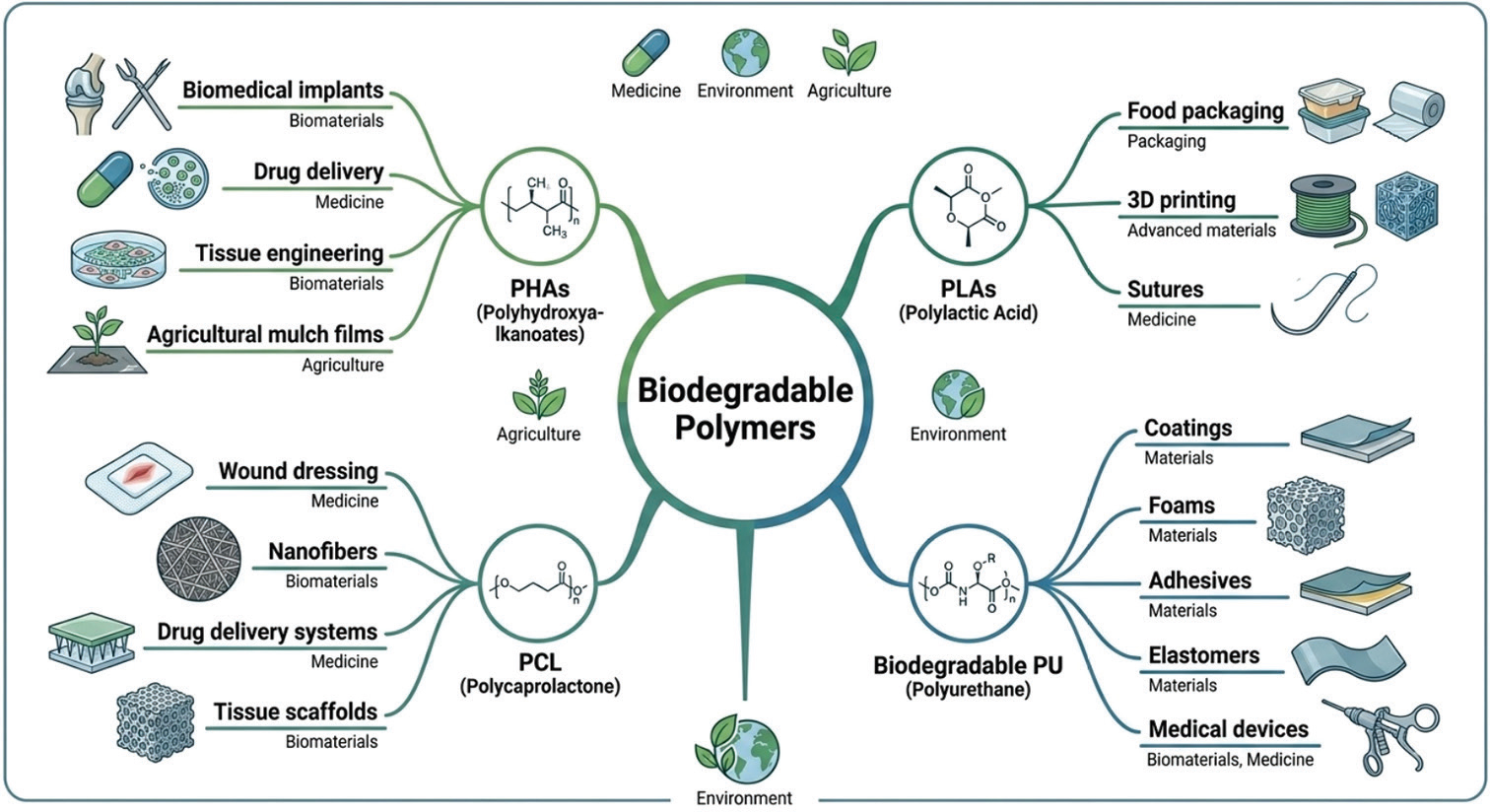 | Figure 2: The various applications of polyolefins. [Click here to view] |
4.1. Chemical and Structural Analysis
Chemical and structural properties in biodegradable polymers dominate their physical and mechanical behaviour. There are numerous approaches followed in studying the composition and structure of molecules. Fourier transform infrared spectroscopy is primarily applied to determine the existence of functional groups present in the polymer and thus check for the existence of chemical bonds within its structure. Nuclear magnetic resonance facilitates more information about the polymer’s molecular structure, thereby explaining information about the chain’s composition and how monomers have been aligned. Analysis by Gel Permeation Chromatography (GPC) will result in determining the distribution regarding molecular weight, which determines the polymer’s strength and elasticity, as well as degradation speed. Chemical composition analysis is also important to ascertain that the biodegradable polymers derived from UCO are free from any harmful impurities and meet the environment-related standards. According to Cappello et al. [47], knowledge of these structural properties optimizes the performance of the polymer for any application.
4.2. Thermal Characterization
Thermal properties determine the processing conditions and the stability of biodegradable polymers at different temperature ranges. Differential scanning calorimetry is the technique with which the melting point, crystallinity, and glass transition temperature, all of which are vital in determining flexibility and strength, are obtained. Thermogravimetric analysis evaluates the thermal stability as well as decomposition temperature, the two being of paramount significance for determining the long-term stability and performance in a large number of applications. Dynamic mechanical analysis could measure the viscoelasticity of the polymer, making it possible to assess how the material would respond to stress, temperature, and time. Such thermal characteristics would be very important for tailoring biodegradable polymers according to specific industrial applications and making them execute efficiently under different environmental conditions [48].
4.3. Mechanical Properties
Mechanical characterization of mechanical properties ensures that the strength and durability of biodegradable polymers are adequate enough to help them be used for the intended purposes. For example, such primary properties as tensile strength, elastic modulus, and impact resistance can be evaluated to determine if the polymer would withstand stress, deformation, or impact. For example, although PLA has high tensile strength, it is used in rigid packages, and its relatively lower impact resistance excludes it from applications that require rigorous operations. This balanced combination of mechanical properties is particularly relevant in applications like biomedical devices that require both strength and flexibility. The mechanical testing will ensure that the biodegradable polymers may replace the traditional plastics without having to compromise their performance, and it also allows them to possess the advantage of environmental sustainability [49].
4.4. Biodegradability and Environmental Performance
Biodegradability and Environmental Performance are some of the features of biodegradable polymers, including the possibility of degrading in natural environments. These materials offer a sustainable alternative to traditional plastics. Several degradation tests are carried out to establish the biodegradability of these materials. Some of them are soil burial tests, which illustrate the rate of degradation of the polymer in soil, whereas compostability tests assess degradation conditions for composting. Apart from that, enzymatic degradation tests test the rate at which the enzymes degrade the polymer to comprehend its biodegradation in biological systems. In addition, one has to check the nature of the products for nontoxicity and environmental compatibility. Biodegradability and environmental compatibility are crucial aspects that have to be taken into account for the acceptance of biodegradable polymers in competitive industries in their quest to reduce their ecological footprint [50].
4.5. Morphological Analysis
Morphology is the most important contributor to the performance of biodegradable polymers, especially when they are applied for biomedical purposes. Scanning Electron Microscopy is carried out to analyze the surface morphology of the polymer to check if it has any signs of porosity, cracks, or any degradation patterns [51]. Atomic Force Microscopy is used to view the surface at very high resolution. The measurement of the roughness of the sample is also assisted by this. The compatibility of the polymer in the biological systems has to be checked, which involves critical scrutiny through the analysis of the morphologies of such polymers for optimized functionalities, meeting the required precise needs for their applications [52].
4.6. Water Absorption and Barrier Properties
Water absorption can also significantly affect the mechanical properties and biodegradability of biodegradable polymers. High water absorption may accelerate the degradation, but it reduces the strength of the polymer as well. The hydrophobic or hydrophilic nature of the polymer is studied using contact angle measurements [53]. Oxygen and water vapor permeability tests are other critical tests as far as evaluating barrier properties, especially for the application of packaging, where the polymer is supposed to protect the content from moisture and oxygen exposure. The tests, therefore, ensure that, although biodegradable polymers degrade efficiently, they also act well in actual applications such as food packaging, whose main requirement will be barrier property [54].
Characterization of biodegradable polymers is the process by which the material is ensured for appropriate sustainable applications. From chemical composition to biodegradability and mechanical strength, each characteristic forms a significant function in determining the performance and environmental effects of these polymers. Elaborate properties are needed to make production processes as optimal as possible, enhance the performance of polymers, and boost their usage as eco-friendly substitutes for traditional plastics. This brings to mind what [47] had reported, suggesting further comparison between synthetic and biodegradable polymer matrices, so the polymers can be used for more applications instead of traditional materials for a better sustainable future.
4.7. Comparison of Polymer Derived from Different Sources
Recycling our waste and making a new resource out of it is one of the options given by the Circular Economy framework. Due to their high visibility, massive production, and difficulty with other management alternatives, plastics are a material with a great need for recycling. Recyclability is based on different factors, such as the difficulty of the collection stage, the low price of the virgin material, a proper design for recycling, and the quality of the secondary resource obtained in comparison to the virgin alternative [55].
Polymers derived from used cooking oil (UCO) exhibit improved environmental and waste, management benefits compared to virgin bio-based oil and fossil fuel derived polymers. The [Table 3] illustrates differences in renewability, economic considerations, and performance among the UCO, virgin biofuel fuel, fossil fuel related polymer sources.
Table 3: Comparison of polymer derived from different sources: UCO, Virgin bio-based polymers, and fossil fuel.
| Feature | UCO-derived polymers (Biopolymers) | Virgin biofuel polymers (Biopolymers) | Fossil fuel polymers (Conventional) |
|---|---|---|---|
| Environmental Impact | Best (Reduces waste, lower carbon footprint, prevents pollution) | Better than fossil fuels, but concerns about land use exist | Worst (High GHG emissions, non-renewable, persistent pollution) |
| Renewability | Yes, derived from a renewable (biomass) waste stream | Yes, derived from renewable crops (e.g., corn, palm oil) | No, derived from finite resources (crude oil, coal, gas) |
| Waste Management | Solves a waste disposal problem, highly sustainable | No direct waste management benefit | Creates persistent, non-biodegradable waste, leading to pollution |
| Economic Factors | Cost-effective feedstock (cheap/free waste material); production costs are a challenge | Higher feedstock cost (requires cultivation, harvesting, processing) | Lower production cost, established infrastructure, but high external environmental costs |
| Performance | Properties can be good, but some quality issues may require additional processing or blending | Properties can rival conventional plastics, but performance varies by type (e.g., PLA vs. PET) | Properties are generally superior and well-optimized |
PLA: Polylactic acid, PET: Polyethylene terephthalate, UCO: Used cooking oil, GHG: Global greenhouse gas.
4.8. Comparative Assessment of Feedstock Derived Polymers
Polymers derived from UCO, Virgin bio-based feedstocks, and fossil fuels exhibit distinct variations in mechanical performance, biodegradability, production efficiency, and environmental impact Table 4. This comparison emphasizes the sustainability advantages of waste-derived polymers while also highlighting the industrial maturity of fossil-based polymers.
Table 4: Comparative assessment of feed stock derived polymers.
| Feedstock source | UCO-derived polymers | Virgin bio-based feedstocks | Fossil fuel–derived polymers |
|---|---|---|---|
| Typical polymer examples | PU, PHA, modified PLA, PCL | PLA, PHA, bio-PE, bio-PU | PE, PP, PET, PS |
| Mechanical properties (Typical) | PU: 5–25 MPa tensile strength; PHA: 20–40 MPa | PLA: 50–70 MPa; PHA: 30–45 MPa | PE/PP: 20–40 MPa; PET: 50–75 MPa |
| Biodegradation time | Months to a few years (depending on polymer and conditions) | Months to years (industrial composting) | Decades to centuries |
| Production yield/efficiency | Moderate; strongly dependent on pretreatment and UCO quality | High and consistent yields | Very high; optimized industrial processes |
| Feedstock variability | High variability (FFA, PV, moisture) | Low variability (controlled feedstock) | Very low variability |
| Scalability/TRL | Medium to High (TRL 4–7) | High (TRL 7–9) | Very High (TRL 9) |
| Environmental impact | High sustainability; waste valorization; low carbon footprint | Renewable but competes with food/land use | High carbon footprint; non-renewable |
| Critical limitations | Inconsistent feedstock quality; pretreatment cost; scale-up challenges | Higher feedstock cost; land-use and food security concerns | Non-biodegradable; major contributor to plastic pollution |
PET: Polyethylene terephthalate, PU: Polyurethane, PHA: Polyhydroxyalkanoates, PLA: Polylactic acid, PCL: Polycaprolactone, PE: Polyethylene, PP: Polypropylene, PS: Polystyrene, FFA: Free fatty acid, PV: Peroxide value, UCO: Used cooking oil.
5. APPLICATIONS OF UCO-BASED BIODEGRADABLE POLYMERS
Recently, there has been growing interest in the use of UCO-derived biodegradable polymers as sustainable replacements for traditional petrochemical plastics, due to renewable characteristics, biodegradability, and waste valorization. UCOs can be converted into polymeric materials, thus abating environmental pollution and contributing to a circular economy agenda through an integrated waste-generation and value-added product generation system [37,56]. These polymers, including PHAs, polylactones, PUs, and fatty-acid-based polyesters, are used in packaging, agriculture, biomedical, and textiles, among others, with distinct properties and sustainability implications [Figure 3].
 | Figure 3: Sector-wise applications of used cooking oil-based biodegradable polymers demonstrating circular economy integration and sustainability benefits. [Click here to view] |
5.1. Packaging Industry
The packaging industry is one of the largest consumers of biodegradable UCO polymers. These polymers are used for food packaging, disposable containers, shopping bags, and cutlery. UCO-based polymers have high barrier properties to moisture and oxygen, thereby protecting food quality and enhancing shelf-life [56]. UCO-based PHAs and PLA have been successfully formed into films, trays, and thermoform packaging products, all meeting food safety regulations. In addition, epoxidized UCO-based polyols are also utilized for coatings and laminates, enhancing thermal resistance and maintaining mechanical stability. Furthermore, biodegradability after disposal helps to reduce waste and is in anticipation of recent and emerging Global packaging regulations, as is the EU Directive on single-use plastics.
5.2. Agricultural Applications
In the agricultural sector, UCO-derived biodegradable polymers are being used in applications such as mulch films, seed coatings, controlled-release fertilizers, and biodegradable pots. PHAs and blends of poly (butylene adipate-co-terephthalate) derived from UCO can be utilized to create mulch films that will biodegrade after the cropping season. Such mulch films reduce labour expenditures and soil contamination [57]. Furthermore, fatty acid-based polyesters can be used in seed coatings and controlled-release fertilizers that not only protect seeds from pests and moisture loss but can also provide a gradual nutrient release. Injection-moulded biopolymer nursery pots and trays made from UCO-based PU can help eliminate single-use plastics, as well as allow plant roots to integrate naturally into soil upon transplant. Altogether, UCO-derived biopolymer applications can facilitate the implementation of regenerative agriculture through enhancing soil health and reducing the carbon footprint of agricultural inputs.
5.3. Biomedical Applications
The biomedical sector is a key high-value sector for biodegradable polymers from UCOs due to their biocompatibility, non-toxicity, and controlled rates of degradation, with application areas, such as drug delivery systems, surgical sutures, bone scaffolds, and wound dressings [58]. Accordingly, UCOs have been shown to provide the basis for PCL and PHAs to fabricate tissue engineering scaffolds through the use of electrospinning or 3D printing approaches, as these scaffolds decompose and degrade over time in vivo and do not require secondary procedures to be removed. UCO-based polyols are also utilized for biomedical PU foams because foams provide ideal flexibility, softness, and biodegradability for wound dressings. Finally, by surface-modifying UCO-based polymers and copolymerizing UCOs, there is potential to increase the release rate of the therapeutic agent, thereby improving therapeutic delivery capabilities. Vegetable oil-based biomaterials as Scaffolds for stem cell growth. A key need for effective tissue engineering and regenerative medicine is to recreate the cellular microenvironment that serves as a mechanical and biological support for cell growth and differentiation, resembling the native extracellular matrix [59].
5.4. Automotive and Electronics
Another area of application for biodegradable polymers derived from UCO is the automotive and electronics industries, where they can be used to produce lightweight, biodegradable components, including interior panels and electronic device cases. This serves to provide more of an environmentally friendly alternative to plastic component use and helps decrease the carbon footprint for these industries. Given the priority placed on sustainability in these industries, biodegradable polymers can be used in conjunction with other initiatives to lower the environmental impact of the manufacturing process [60].
5.5. Cosmetics and Personal Care
In the cosmetics and personal care industries, biodegradable polymers are available for uses such as capsules for the controlled release of active ingredients and biodegradable cosmetic packaging. This is an example of how important biodegradable polymers are becoming in personal care products, not only to reduce packaging but also the produce more sustainable beauty products for mass consumption. This represents the growing consumer demand for alternatives that promote sustainability in the production of consumer goods.
The foaming biodegradable polymers from UCO have multifaceted applications across multiple sectors, beginning with packaging, agribusiness, biomedical, textiles, automotive, electronics, and personal care. These polymers are aimed at reducing waste accumulation and promoting the sustainable production and consumption of materials within a circular economy. Large-scale production of biodegradable polymers across multiple industries does serve to improve issues of sustainability and plastic waste reduction [56-58].
6. CHALLENGES IN MANUFACTURING AND ADOPTION
Although UCO-based biodegradable polymers possess some environmental and socioeconomic advantages, they have a few disadvantages that restrain their mass production and use. The foremost drawback of UCO-based biodegradable polymers is the variability and quality control. The quality of UCO varies widely since it depends on the source and previous use, which in turn affects the uniformity and performance of the final polymer product. UCO normally has food residues and water impurities that need major cleaning and processing before it can be transformed into polymers. This complexity makes the production processes cumbersome and costly [61].
The other major limitation is its scalability in production. The current production scale of biodegradable polymers based on UCO is quite low and, therefore, not yet readily available in the market. The scaling up of production while still maintaining quality and performance at an industrial level is a significant difficulty. Facilities for large-scale UCO production remain in development. They will entail high capital costs in infrastructure and elaborate technologies with more substantial research for affordable and cost-effective production [57]. It is economically non-viable since, even though UCO remains an economical feedstock, transesterification and polymerization processes remain cost-intensive as well as highly energy-intensive in their conversion into biodegradable polymers. Improving efficiency in production and lowering costs to the point that UCO-based polymers can be competitive with conventional, petroleum-based plastics will be the key to commercial viability.
Limited awareness and market demand are significant challenges for UCO-based biodegradable polymers. While the environmental awareness of people is increasing, the business sector remains reluctant to switch to alternative polymers due to performance, cost, and availability issues. Lack of standard testing and certification of biodegradable polymers hampers their acceptance in sensitive sectors such as food packaging.
Finally, the regulatory and policy challenges feature in the slow adoption of these polymers. The regulations about the manufacture and use of biodegradable polymers differ with country. For instance, there are specific standards in some countries regarding the level of biodegradability as well as the level of performance expected from the products that would be produced. Without adequate, clear, and uniform guidelines, as well as support from policymakers, large-scale adoption of UCO-based biodegradable polymers remains challenging [9].
Thus, while the biodegradable polymers based on UCO hold considerable potential, overcoming these challenges is important for their successful integration into mainstream markets. Continued technological advancements, economic optimization, and supportive policy frameworks will be crucial to unlocking their full potential.
7. FUTURE DIRECTIONS AND INNOVATIONS
Future goals for UCO-based biodegradable polymers are production efficiency improvement, further innovative purification for better feedstock quality, and scale-up of the processes. Green catalysts and enzymatic polymerization can also further improve energy consumption and make the production process more environmentally friendly. Biodegradable polymer formulations can be improved and find new applications in packaging, biomedical, and agricultural fields while enhancing performance. Collaboration among the industry, academia, and policymakers will be critical in establishing global standards and incentive programs to support the widespread adoption of such sustainable materials that promote advancement toward a circular economy and also used in biomaterials, and additives, such as biolubricants, grease, and may be road construction.
8. CONCLUSION
Biodegradable polymers are the most promising alternative for sustainable solutions in a world struggling with plastic pollution. UCO, being a renewable and low-cost feedstock, holds enormous potential for producing green polymers. This review puts forth the two benefits of using UCO, which include valorization of waste and environmental sustainability. It explores the processes of transesterification and polymerization, analyzing the physicochemical properties, environmental performance, and applications of UCO-based biodegradable polymers, thus demonstrating their viability over traditional fossil-based alternatives. However, challenges such as feedstock variability, scalability, and economic feasibility persist. Addressing these issues through technological innovations and policy support will be critical to overcoming barriers. In the future, UCO-based biodegradable polymers will transform industries and also promote circular economy principles. Its contribution to sustainable development will be significant.
9. AUTHORS’ CONTRIBUTIONS
All authors made substantial contributions to conception and design, acquisition of data, or analysis and interpretation of data; took part in drafting the article or revising it critically for important intellectual content; agreed to submit to the current journal; gave final approval of the version to be published; and agreed to be accountable for all aspects of the work. All the authors are eligible to be an author as per the International Committee of Medical Journal Editors (ICMJE) requirements/guidelines.
10. FUNDING
This review article received no external funding.
11. CONFLICTS OF INTEREST
The authors declare that there are no conflicts of interest associated with this manuscript. Although one of the authors, Ganesan Mahalingam, is affiliated with an industry organization (South India Krishna Oils and Fats Private Limited, Nellore, Andhra Pradesh, India), this affiliation had no direct or indirect influence on the study design, experimental work, data interpretation, results, or manuscript preparation.
12. ETHICAL APPROVALS
This study does not involve experiments on animals or human subjects.
13. DATA AVAILABILITY
The data supporting the findings of this review article are derived from publicly available sources and they are referenced in the literature.
14. PUBLISHER’S NOTE
All claims expressed in this article are solely those of the authors and do not necessarily represent those of the publisher, the editors and the reviewers. This journal remains neutral with regard to jurisdictional claims in published institutional affiliation.
15. USE OF ARTIFICIAL INTELLIGENCE (AI)-ASSISTED TECHNOLOGY
The authors declare that they have not used artificial intelligence (AI)-tools for writing and editing of the manuscript, and no images were manipulated using AI.
REFERENCES
1. Landrigan PJ, Raps H, Cropper M, Bald C, Brunner M, Canonizado EM, et al. The minderoo-monaco commission on plastics and human health. Ann Glob Health. 2023;89:23. [CrossRef]
2. Megha M, Kamaraj M, Nithya TG, GokilaLakshmi S, Santhosh P, Balavaishnavi B. Biodegradable polymers research and applications. Phys Sci Rev. 2024;9:949-72. [CrossRef]
3. Okolie O, Kumar A, Edwards C, Lawton LA, Oke A, McDonald S, et al. Bio-based sustainable polymers and materials:From processing to biodegradation. J Composit Sci. 2023;7:213. [CrossRef]
4. Tiwari A. Advancement of materials to sustainable &green world. Adv Mater Lett. 2023;14:23031724. [CrossRef]
5. Finnveden M, Hendil-Forssell P, Claudino M, Johansson M, Martinelle M. Lipase-catalyzed synthesis of renewable plant oil-based polyamides. Polymers (Basel). 2019;11:1730. [CrossRef]
6. Judijanto L. Innovative pathways for sustainable aviation fuel production:Leveraging used cook-ing oil as high potentials feedstocks. Int J Evol Sus Renew Energy Sol. 2025;1(1):1-7.
7. Feng G, Ma Y, Zhang M, Jia P, Liu C, Zhou Y. Synthesis of bio-base plasticizer using waste cooking oil and its performance testing in soft poly (vinyl chloride) films. J Bioresour Bioprod. 2019;4:99-110. [CrossRef]
8. Sen KY, Baidurah S. Renewable biomass feedstocks for production of sustainable biodegradable polymer. Curr Opin Green Sustain Chem. 2021;27:100412. [CrossRef]
9. Kumar A, Bhayana S, Singh PK, Tripathi AD, Paul V, Balodi V, et al. Valorization of used cooking oil:Challenges, current developments, life cycle assessment and future prospects. Discov Sustain. 2025;6:119. [CrossRef]
10. Pandey P, Dhiman M, Kansal A, Subudhi SP. Plastic waste management for sustainable environment:Techniques and approaches. Waste Dispos Sustain Ener. 2023;5:205-22. [CrossRef]
11. Degfie TA, Mamo TT, Mekonnen YS. Optimized biodiesel production from waste cooking oil (WCO) using calcium oxide (CaO) nano-catalyst. Sci Rep. 2019;9:18982. [CrossRef]
12. Orjuela A, Clark J. Green chemicals from used cooking oils:Trends, challenges, and opportunities. Curr Opin Green Sustain Chem. 2020;26:100369. [CrossRef]
13. Fernández Ocamica V, Palacino B, BartoloméC, Bernardes Figueirêdo M, Lázaro García C. Trade-offs and synergies of key biobased value chains and sustainable development goals (SDGs). Sustainability (Switzerland). 2025;17:3040. [CrossRef]
14. Enfrin M, Gowda A, Resources FG. Low-cost chemical modification of refined used cooking oil to produce long-lasting bio-asphalt pavements. Recycl Conserv Recycl. 2024;204:107493. [CrossRef]
15. Subri US, Ghani MM, Mastam NM, Zakaria AF, Musta MS, Damanhuri AA. Sustainable solutions for household waste management:Transforming UCO into soap in local communities. Multidiscip Rev. 2025;8:20. [CrossRef]
16. Bardella N, Facchin M, Fabris E, Baldan M, Beghetto V. Waste cooking oil as eco-friendly rejuvenator for reclaimed asphalt pavement. Materials (Basel). 2024;17:1477. [CrossRef]
17. Chrysikou L, Dagonikou V, Dimitriadis A, Bezergianni S. Waste cooking oils exploitation targeting EU 2020 diesel fuel production:Environmental and economic benefits. J Clean Prod. 2019;219:566-75. [CrossRef]
18. Suryani AS, Tambunan T, Santosa B, Haryanto JT. Circular economy approach to the management of used cooking oil for biofuel production. J Econo Manage Entrepreneur Bus (JEMEB). 2024;4:142.
19. Tang Q, Li Q, Pan X, Xi Z, Zhao L. Poly (acrylated epoxidized soybean oil)-modified carbon nanotubes and their application in epoxidized soybean oil-based thermoset composites. Polym Compos. 2021;42:5774-88. [CrossRef]
20. Abrante-Pascual S, Nieva-Echevarría B, Goicoechea-Oses E. Vegetable oils and their use for frying:A review of their compositional differences and degradation. Foods. 2024;13:4186. [CrossRef]
21. Bazina N, Ahmed T, Almdaaf M, Abu Hallalah HM, Jibia S. Chemical changes in deep-fat frying:Reaction mechanisms, oil degradation, and health implications. Food Sci Nutr. 2025;13:e70969. [CrossRef]
22. Sadawarte PD, Annapure US. Study of the behavior and properties of frying oil on repetitive deep frying. J Food Sci Technol. 2023;60:2549-56. [CrossRef]
23. Jung S, Kim M, Kim YH, Lin KY, Chen WH, Tsang YF, et al. Use of sewage sludge biochar as a catalyst in production of biodiesel through thermally induced transesterification. Biochar. 2022;4:67. [CrossRef]
24. Eurofins India. Total Polar Compounds in Edible Oils Testing. India: Eurofins India;n.d.
25. Márquez-Ruiz G, Ruiz-Méndez MV, Holgado F. Depolymerization and oxidation events in used frying oils under conditions simulating gastric digestion. Foods. 2025;14:925. [CrossRef]
26. ScianòF, Bernardoni BL, D'Agostino I, Ferrara G, Tafi A, Garavaglia S, et al. Toxic aldehydes in cooking vegetable oils:Generation, toxicity and disposal methods. Food Chem X. 2025;29:102744. [CrossRef]
27. Abriana A, Laga S. Fatty acid composition of repeatedly used cooking oil in small and medium enterprises in Makassar City, Indonesia. Food Res. 2025;9:264-74. [CrossRef]
28. Valle C, Echeverría F, Chávez V, Valenzuela R, Bustamante A. Deep-frying impact on food and oil chemical composition:Strategies to reduce oil absorption in the final product. Food Saf Health. 2024;2:414-28. [CrossRef]
29. Suzihaque M, Syazwina N, Alwi H, Ibrahim UK, Abdullah S, Haron N. A sustainability study of the processing of kitchen waste as a potential source of biofuel:Biodiesel production from waste cooking oil (WCO). Mater Today Proc. 2022;63:S484-9. [CrossRef]
30. Lopresto CG. Sustainable biodiesel production from waste cooking oils for energetically independent small communities:An overview. Int J Environ Sci Technol. 2025;22:1953-74. [CrossRef]
31. Nur W, Rosli MH, Nur W, Samsuri S. Comparative review of biodiesel production and purification. Carbon Capture Sci Technol. 2024;1;13:100264-4. [CrossRef]
32. Uçar B, Gholami Z, SvobodováK, HradeckáI, Foods VH. A comprehensive study for determination of free fatty acids in selected biological materials:A review. Foods. 2024;13:189. [CrossRef]
33. Beghetto V. Waste cooking oils into high-value products:Where is the industry going?Polymers. 2025;17(7):887. [CrossRef]
34. Montoro-Alonso S, Expósito-Almellón X, Martínez-Baena D, Martínez-MartíJ, Rueda-Robles A, Pérez-Gálvez R, et al. Bioactive enrichment and sustainable processing of vegetable oils:New frontiers in agri-food technology. Foods. 2025;24:769. [CrossRef]
35. Gusti E, Juita E, Widiana R, Dasrizal D, Siherdoni S. The impact of organic waste and used cooking oil transformation on environmental awareness:A case study in Padang City. Int J Soc Sci Hum Res. 2024;7:9587-92. [CrossRef]
36. Lopresto CG, De Paola MG, CalabròV. Importance of the properties, collection, and storage of waste cooking oils to produce high-quality biodiesel - an overview. Biomass Bioener. 2024;189:107363. [CrossRef]
37. Azzena U, Montenero A, Carraro M, Crisafulli R, De Luca L, Gaspa S, et al. Recovery, purification, analysis and chemical modification of a waste cooking oil. Waste Biomass Valoriz. 2023;14:145-57. [CrossRef]
38. Malewska E, Polaczek K, Kuranska M. Impact of various catalysts on transesterification of used cooking oil and foaming processes of polyurethane systems. Materials. 2022;15:7807. [CrossRef]
39. Hayes G, Laurel M, MacKinnon D, Zhao T, Houck HA, Becer CR. Polymers without petrochemicals:Sustainable routes to conventional monomers. Chem Rev. 2023;123:2609-734. [CrossRef]
40. Nurchi C, Buonvino S, Arciero I, Melino S. Sustainable Vegetable Oil-based biomaterials:synthesis and biomedical applications. Int J Mol Sci. 2023;24. [CrossRef]
41. Awogbemi O, Kallon DV, Aigbodion VS, Panda S. Advances in biotechnological applications of waste cooking oil. Case Stud Chem Environ Eng. 2021;4:100158. [CrossRef]
42. Díez-Pascual AM, Rahdar A. Composites of vegetable oil-based polymers and carbon nanomaterials. Macromol. 2021;1:276-92. [CrossRef]
43. Yuwa-Amornpitak T, Chookietwatana K. Bioconversion of waste cooking oil glycerol from cabbage extract to lactic acid by Rhizopus microsporus. Braz J Microbiol. 2018 Nov;49 Suppl 1(Suppl 1):178-184. [CrossRef]
44. Ciastowicz ?, Pamu?a R, Bobak ?, Bia?owiec A. Characterization of Vegetable Oils for Direct Use in Polyurethane-Based Adhesives: Physicochemical and Compatibility Assessment. Materials 2025;18. [CrossRef]
45. Sheldon RA, Brady D. Green chemistry, biocatalysis, and the chemical industry of the future. ChemSusChem. 2022;15:e202102628. [CrossRef]
46. Wang B, Wang B, Shukla S, Catalysts RW. Enabling catalysts for biodiesel production via transesterification. Catalysts. 2023;13:740. [CrossRef]
47. Cappello, M.; Filippi, S.; Rossi, D.; Cinelli, P.; Anguillesi, I.; Camodeca, C.; Orlandini, E.; Polacco, G.; Seggiani, M. Waste-Cooking-Oil-Derived Polyols to Produce New Sustainable Rigid Polyurethane Foams. Sustainability 2024, 16, 9456. [CrossRef]
48. Chen H, Chen F, Chen H, Liu H, Chen L, Yu L. Thermal degradation and combustion properties of most popular synthetic biodegradable polymers. Waste Manage Res. 2023;41:431-41. [CrossRef]
49. Glaskova-Kuzmina T, Starkova O, Gaidukovs S, Platnieks O, Gaidukova G. Durability of biodegradable polymer nanocomposites. Polymers. 2021;13:3375. [CrossRef]
50. Dallaev R, PapežN, Allaham M, Holcman V. Biodegradable polymers:Properties, applications, and environmental impact. Polymers (Basel). 2025;17:1981. [CrossRef]
51. Rydz J, ŠiškováA, AndicsováEckstein A. Scanning electron microscopy and atomic force microscopy:Topographic and dynamical surface studies of blends, composites, and hybrid functional materials for sustainable future. Adv Mater Sci Eng. 2019;2019:6871. [CrossRef]
52. Aziz T, Ullah A, Ali A, Shabeer M, Shah MN, Haq F, et al. Manufactures of bio-degradable and bio-based polymers for bio-materials in the pharmaceutical field. J Appl Polym Sci. 2022;139:e52624. [CrossRef]
53. Silva, R.R.A.; Marques, C.S.; Arruda, T.R.; Teixeira, S.C.; de Oliveira, T.V. Biodegradation of Polymers: Stages, Measurement, Standards and Prospects. Macromol 2023, 3, 371-399. [CrossRef]
54. Yue S, Zhang T, Wang S, Han D, Huang S, Xiao M, et al. Recent Progress of Biodegradable Polymer Package Materials: Nanotechnology Improving Both Oxygen and Water Vapor Barrier Performance. Nanomaterials 2024;14. [CrossRef]
55. Sazdovski I, Serra-Parareda F, Delgado-Aguilar M, Milios L, Azarkamand S, Bala A, et al. Circular quality of polymers:Test-based evidence for comparison of bio-based and fossil-based polymers. Polymers (Basel). 2025;17:1629. [CrossRef]
56. Shaikh S, Yaqoob M, Aggarwal P. An overview of biodegradable packaging in food industry. Curr Res Food Sci. 2021;4:503-20. [CrossRef]
57. Sangkharak K, Khaithongkaeo P, Chuaikhunupakarn T, Choonut A, Prasertsan P. The production of polyhydroxyalkanoate from waste cooking oil and its application in biofuel production. Biomass Convers Bioref. 2021;11:1651-64. [CrossRef]
58. Favre LM, Masurier N, Aubert-Pouëssel A. Vegetable oil-based materials for drug delivery systems and wound dressings. Macromol Biosci. 2026;26(3):e00486. [CrossRef]
59. Alaswad SO, Mahmoud AS, Arunachalam P. Recent advances in biodegradable polymers and their biological applications:A brief review. Polymers. 2022;14(22):4924. [CrossRef]
60. Brandão AS, Gonçalves A, Santos JM. Circular bioeconomy strategies:From scientific research to commercially viable products. J Clean Prod. 2021;295:126407. [CrossRef]
61. Sayyed R, Shaikh S, Wani S, Rehman MT, Al Ajmi MF, Haque S, et al. Production of biodegradable polymer from agro-wastes in Alcaligenes sp. And Pseudomonas sp. Molecules. 2021;26:2443. [CrossRef]